What Runners Can Do About 3 Common Toenail Problems
If you’re a runner, you know the most frustrating pain can come from your toenails. At My Chicago Foot Expert, we realize that toenail issues like ingrown toenails and fungus can completely derail your running routines, so let’s look at what we can do to prevent them.
Black and Blue Toenails
That dark, often painful black or purple color under your toenail is called a subungual hematoma, and it’s essentially a bruise under the nail caused by repeated microtrauma. Think of your toe constantly hitting the front of your shoe, especially when running downhill or stopping quickly. Sometimes, this impact causes blood vessels beneath the nail to rupture and pool.
You can often prevent this by ensuring your running shoes have adequate toe box room. Your foot swells during long runs, so you need about a thumbnail’s width of space between your longest toe and the tip of the shoe.
And if the pressure is severe and the pain is intense, we can relieve the pressure by making a tiny hole in the nail, which offers immediate relief.
Ingrown Toenails
Ingrown toenails happen when the edge of your nail grows into the surrounding skin, which leads to pain, redness, and potential infection. Runners are prone to this because the constant forward force of running pushes the skin against the nail edge. Wearing running shoes that are too narrow in the toe box only makes this compression worse.
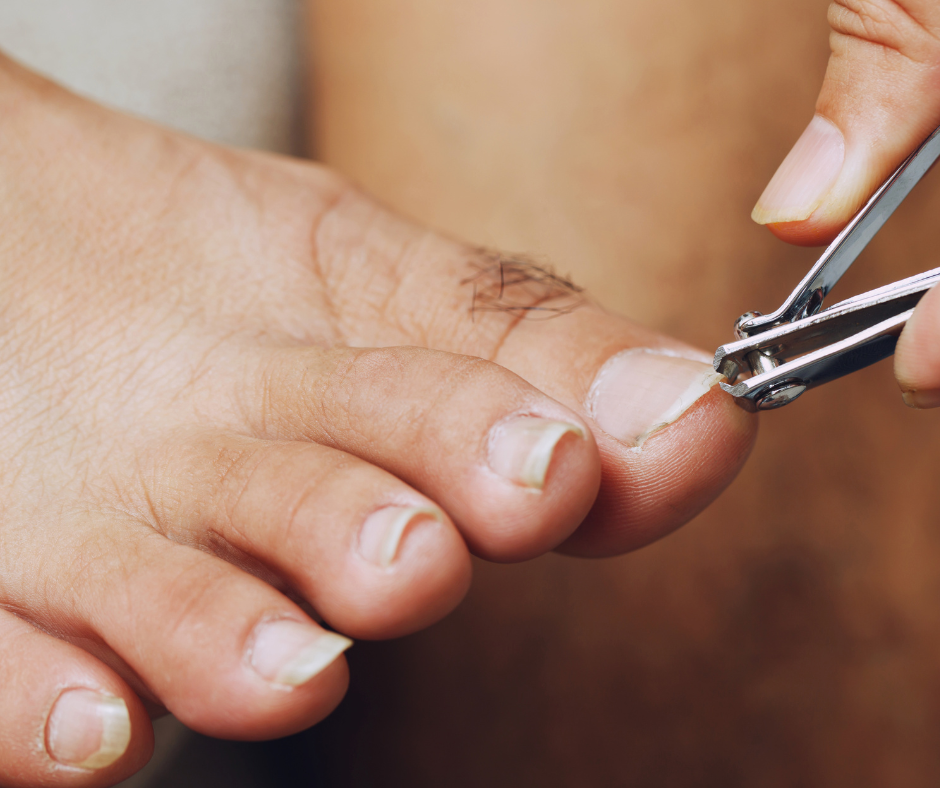
That’s why you should always trim your toenails straight across. And if you find your ingrown nail is red, oozing, or intensely painful, you should definitely see a podiatrist. They can safely remove the ingrown portion and treat the area.
Toenail Fungus
Runners are highly susceptible to toenail fungus. This is because fungi thrive in dark, warm, moist environments, which are exactly the conditions created by sweaty feet enclosed in running shoes and socks. The fungus can also cause the nail to become thick, brittle, and discolored (yellow, brown, or white).
You might even develop what’s called Runner’s Toenail, which is where the toenail plate lifts or separates from the nail bed underneath. It’s often caused by the same repetitive, upward-shearing stress that causes the black nail, especially if you have a long second toe that takes the brunt of the pressure.
To prevent this, you can wear moisture-wicking socks (avoid cotton!) to ensure your shoes have time to completely dry out between runs.
And if you notice signs of fungus, it’s best to address them quickly; they are notoriously stubborn and can be challenging to treat without a podiatrist’s guidance.
So, while your toenail problems may start as eye sores and be minimally painful, just be proactive so that they don’t turn into one of these 3 conditions. For any questions about foot health and wellness, reach out to the tenured staff at My Chicago Foot Expert by calling (773) 561-8100 or by clicking here to schedule an appointment with Cook County podiatrist Stavros O. Alexopoulos, DPM, in our modern, comfortable Ravenswood office today.